
Bidhra
Browse
← All projectsDeir Al-Balah · Gaza
Project No. 001 · The First Story

He spent half his life shaping children.
Now he's shaping Gaza.

Project No. 001The First Story

Verified
Fully documented
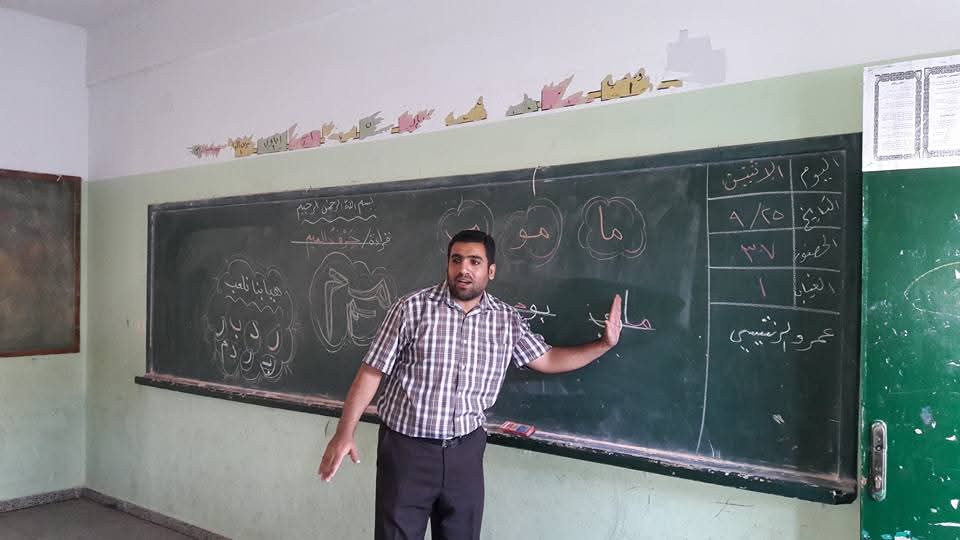
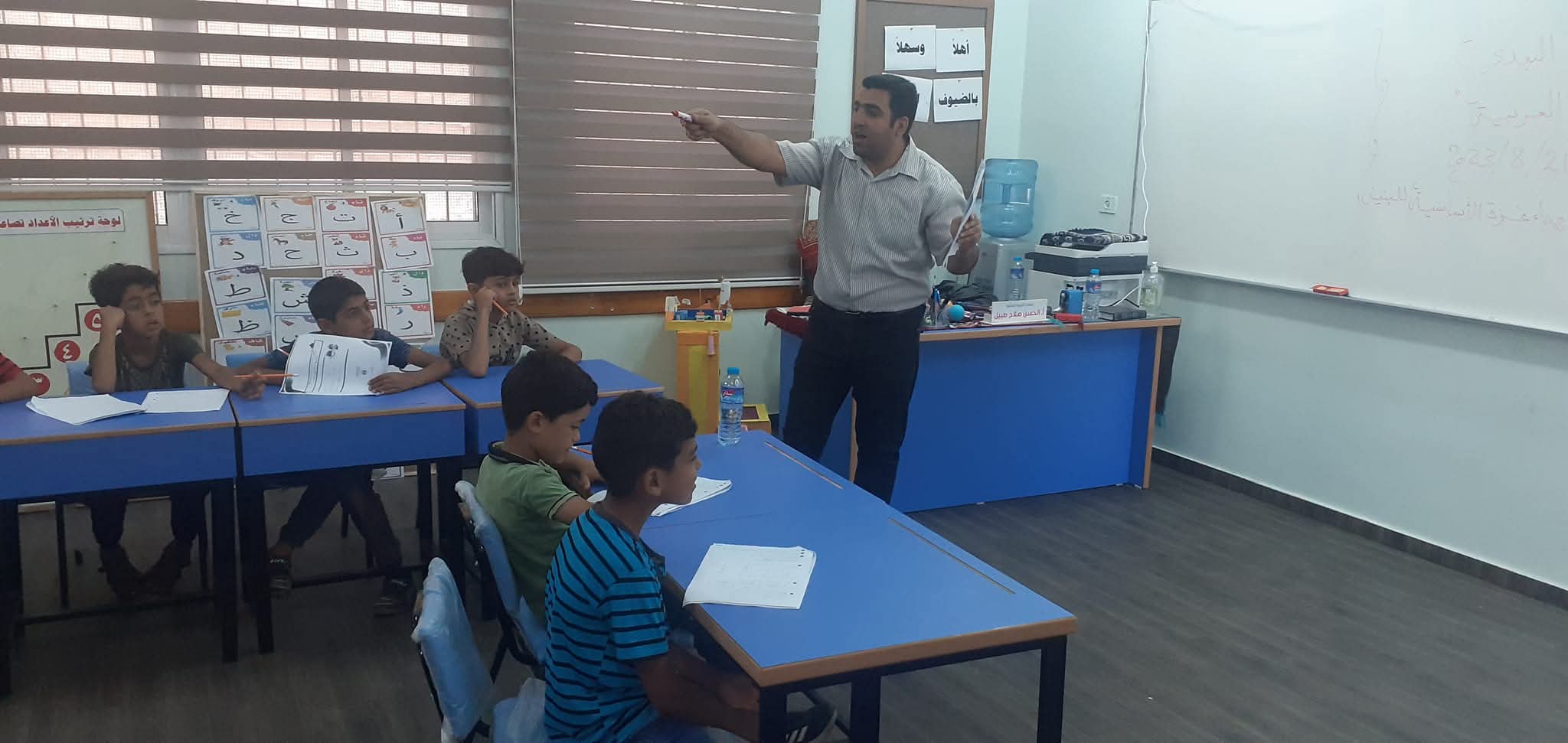
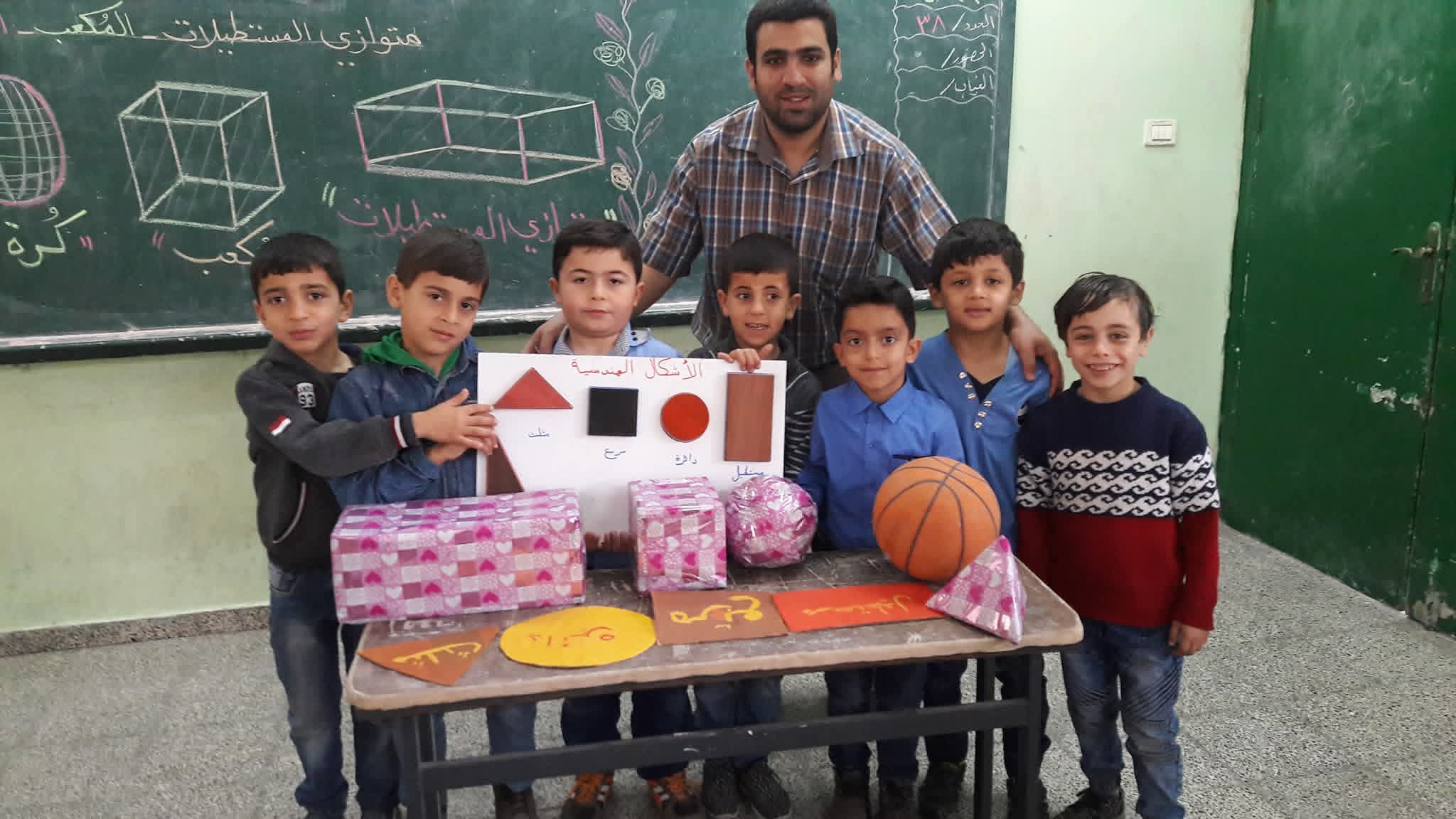
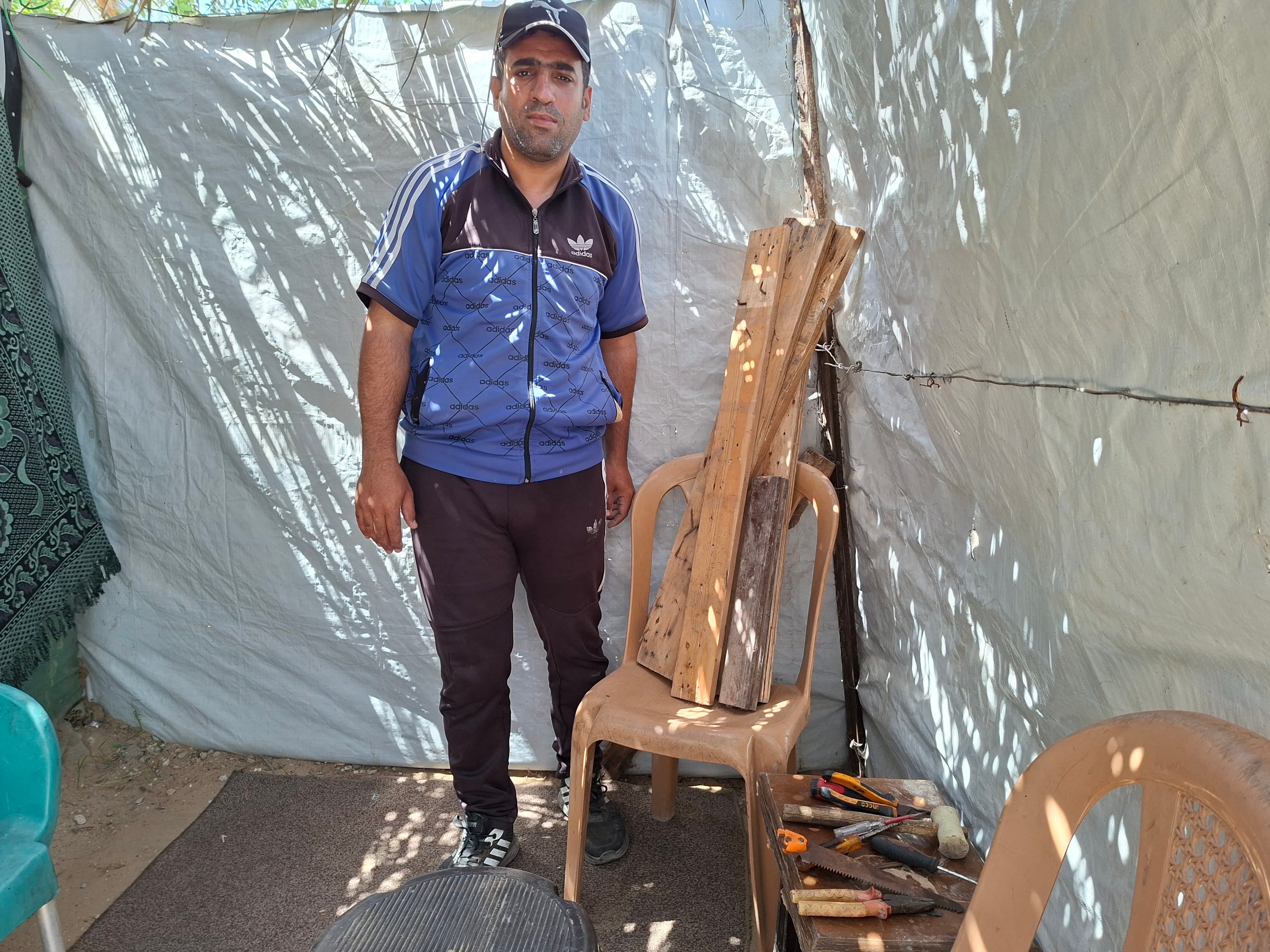
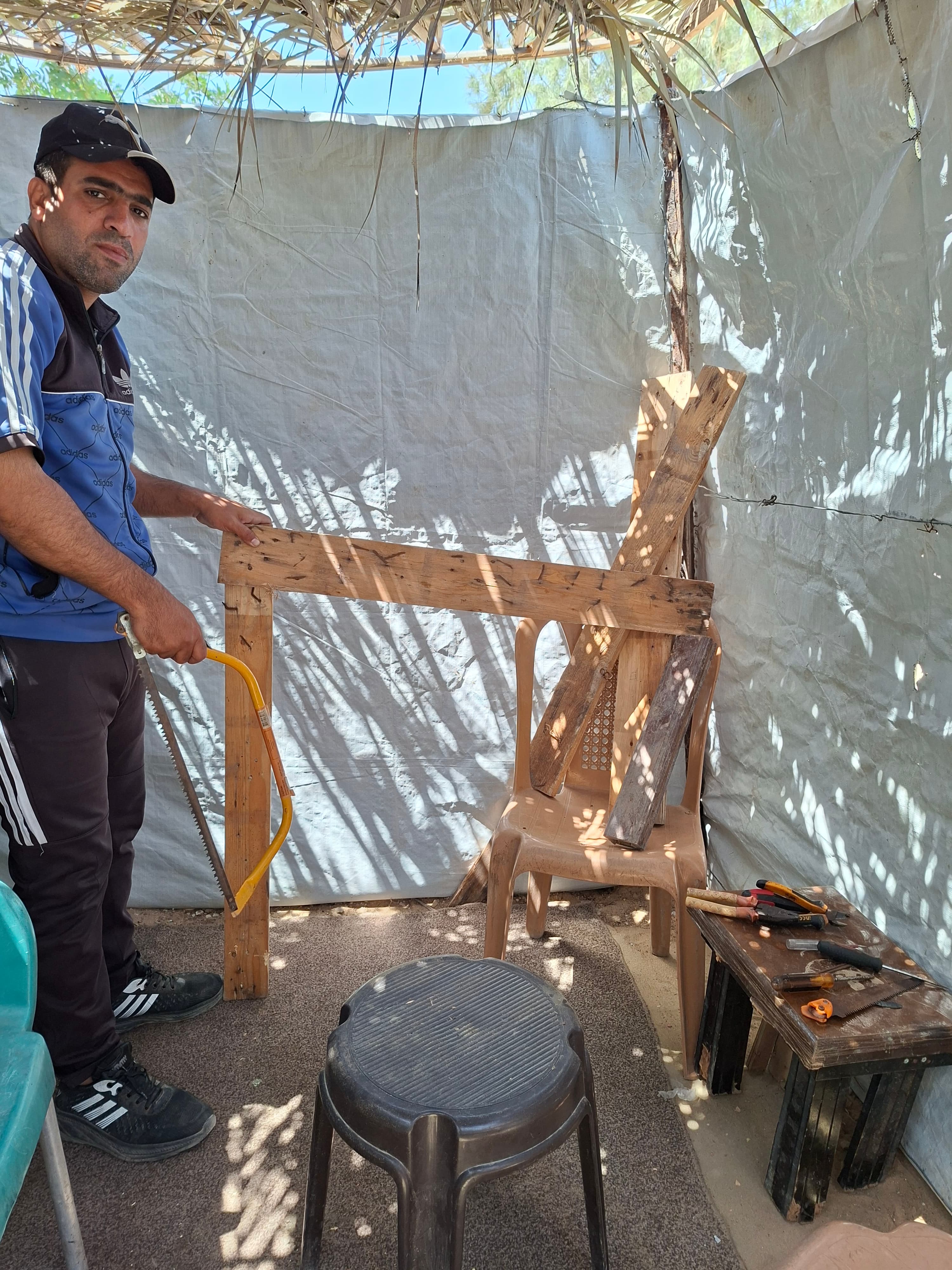
Moamen, workshop momentMoamen, workshop momentMoamen, workshop momentMoamen, portrait close-up

Moamen Naim Wasfi Mushtaha

Teacher · Carpenter · Father of Five

Age
39 years
Origin
Shejaiya, North Gaza
Displaced to
Deir Al-Balah
Family
5 members
Experience
16 yrs teaching
Education
B.A. Basic Education
Verified Project · Bidhra 001
The Story

The war took his home in Shejaiya. The schools rejected him despite 16 years of teaching. So he taught himself a new craft. With his own hands.

I

Chapter One · Displacement

The war took his house.
It didn't take his hands.

Moamen has five family members to take care of. The war took his house in the north of Gaza, in Shejaiya. He is now displaced to the south, in Deir Al-Balah.

Like every Palestinian in Gaza, Moamen needed furniture and basic things for his tent. But instead of crying, instead of waiting for the aid, instead of waiting for the conditions to become easier, he built his own things with his own hands.

He built tents for his family. Then for his relatives. And through this, Moamen became an engineer in woodworking. He gained the experience the only way he could: by doing it.

In a system where Gaza has lost so many experienced teachers, to the war, to the conditions we live in, a man like him should be treated as valuable gold.
On Moamen · 16 years of teaching experience
II

Chapter Two · Rejection

Rejected. Not for lack of skill.
For lack of connections.

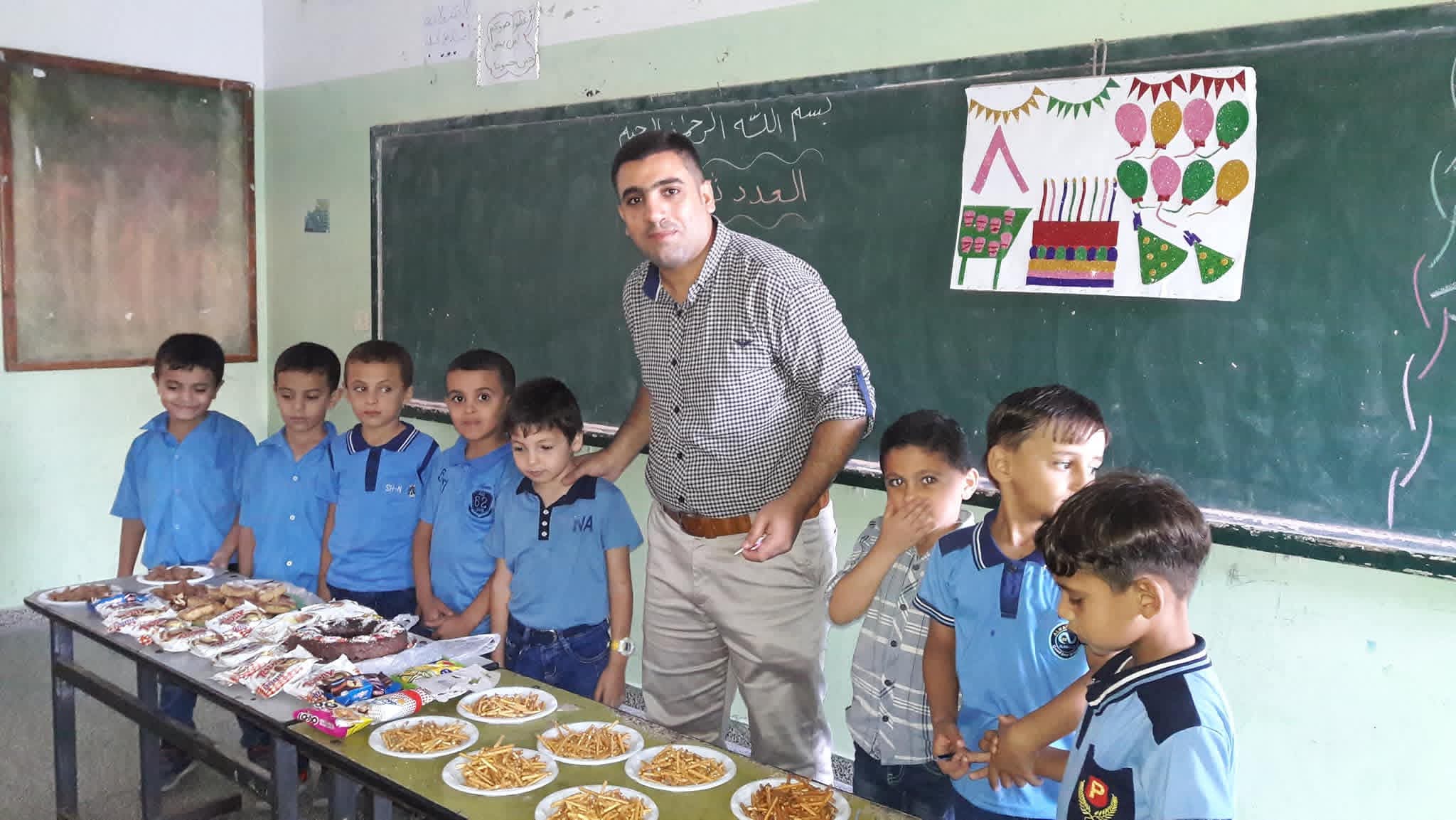
Classroom door, old ID photo

Moamen tried many times to go back to teaching. He was rejected every time. Not because of his skills. Not because of his experience.

He was rejected because he didn't know the right people. In a broken system, connections decide who works and who doesn't. Not talent, not years of service. In a Gaza that has lost so many teachers, Moamen should have been the first to be hired, not the last.

So he made a decision. If the system wouldn't use his mind, he would use his hands.

III

Chapter Three · The Plan

A woodworking shop.
For tents, homes, shops, weddings.

Tools, wood pallets, sketches of the shop

Moamen decided to open a woodworking shop.

Because the lives of Gazans have become lives in tents. And wood is the only thing they can use to make furniture for their tents, for the homes they are trying to rebuild, for shops, for wedding furniture.

The need is urgent. The need is everywhere.

And Moamen doesn't want to do this alone. He wants to hire skilled Palestinians to work with him, to give them what no one gave him: a chance based on skill, not connections.

Project 001

Feasibility Study

The project aims to establish a small woodworking workshop specializing in the production of wooden furniture and products needed by people in Gaza, such as chairs, tables, cabinets, home furniture, and school furniture. The project focuses on practical and affordable products that meet the current needs of families and institutions.

1. Workspace

Renting a suitable workshop or workspace.

Access to a reliable electricity source.

2. Essential Equipment

Circular saw.

Table saw.

Electric drill.

Electric sanding machine.

Measuring tools, including tape measure, angle ruler, and level.

Screwdrivers, hammers, and other hand tools.

3. Raw Materials

Various types of wood, especially the materials currently available in Gaza, including white wood and wooden planks.

An appropriate quantity of wood to begin production, depending on available resources and demand.

Nails and screws.

Wood glue.

Hinges and furniture accessories.

Paints and varnish.

Manufacturing wooden chairs.

Producing home and school tables.

Building cabinets and shelves.

Providing custom woodworking services.

Designing and producing school desks and benches.

Contributing to the rehabilitation and furnishing of facilities and institutions when contract opportunities become available.

The project is expected to generate a minimum profit of 1,500 NIS, equivalent to approximately $520 USD, through regular furniture sales to local customers.

Profits may exceed $2,000 USD in certain cases, especially when securing contracts with schools or institutions.

Each wooden chair can generate a profit ranging between $20 and $50 USD, depending on size, finishing quality, and production costs.

The project will create direct employment opportunities for at least two people alongside Moamen.

It is expected to positively impact at least 12 individuals directly and indirectly through the families of those involved in the project.

The project helps shift people away from long-term dependence on aid and donations by creating sustainable income opportunities.

A portion of future profits will be allocated to support other small community projects.

Due to the extensive destruction and ongoing challenges in Gaza, many people are increasingly turning to wooden furniture as a practical alternative. The project will produce wooden chairs, school desks, cabinets, and other furniture suitable for tents and temporary living conditions. This will provide valuable support to families and contribute to improving daily living conditions.

Moamen Woodworking Project is a practical and sustainable small business that combines economic and social impact. It provides a stable source of income, creates employment opportunities, and produces essential furniture needed by the local community. The project is expected to generate at least 1,500 NIS ($520 USD) in regular sales and may exceed $2,000 USD through contracts with schools and institutions, while positively impacting at least 12 people directly and indirectly.